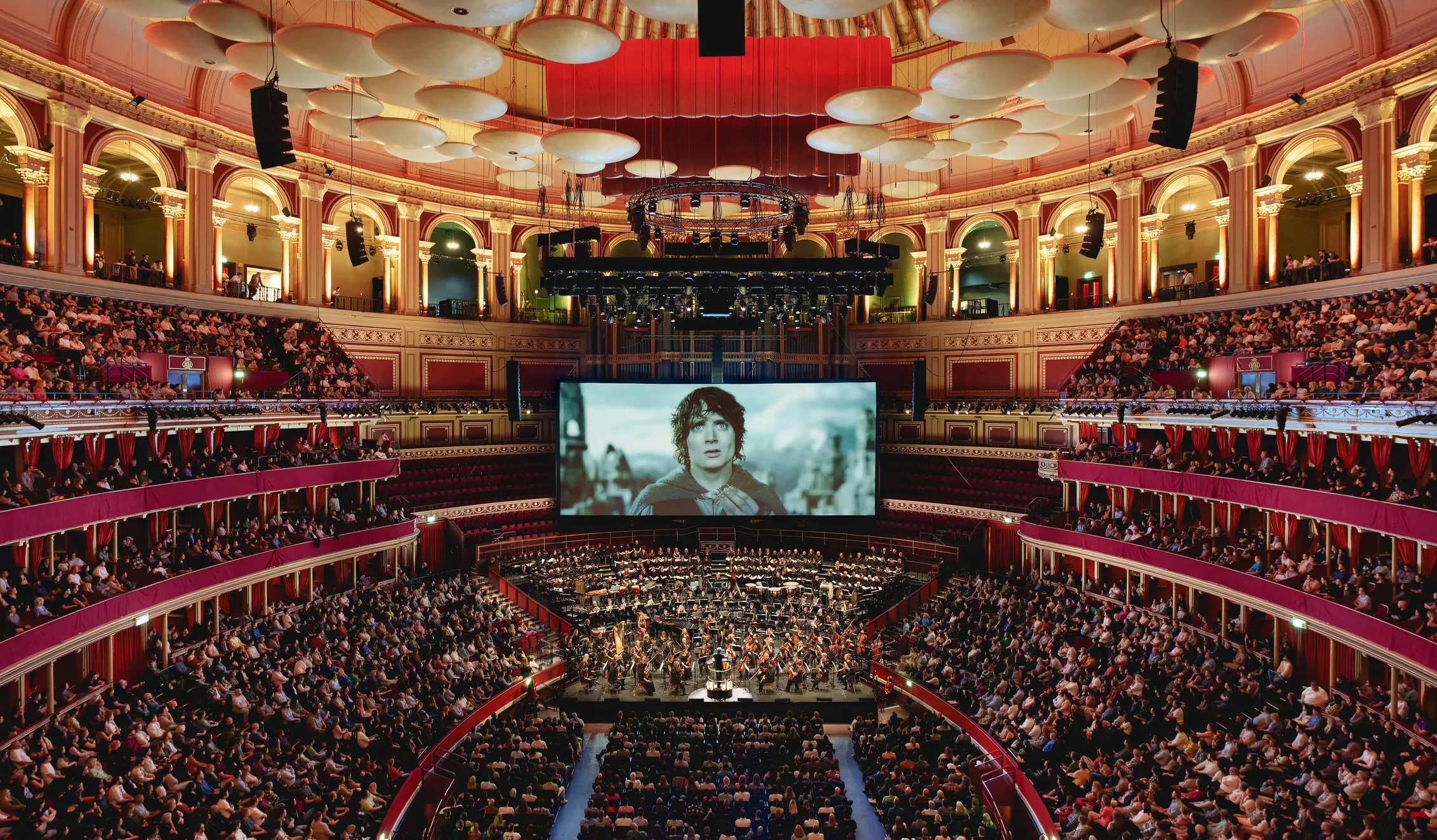
Beethoven wanted his Ninth Symphony to embrace all humanity, so when Tan Dun set out to compose his own tribute to Beethoven after being commissioned by the Royal Philharmonic Society (RPS), he aimed just as high – combining ancient poetry from China and Europe to create an “ode to peace” worthy of Beethoven’s Ode to Joy. His choral concerto Nine is everything you’d expect from the composer of Crouching Tiger, Hidden Dragon, and in this concert Tan Dun joins us to conduct the UK premiere – plus a full performance of Beethoven’s world-changing symphony. East meets West, and the result transcends both.
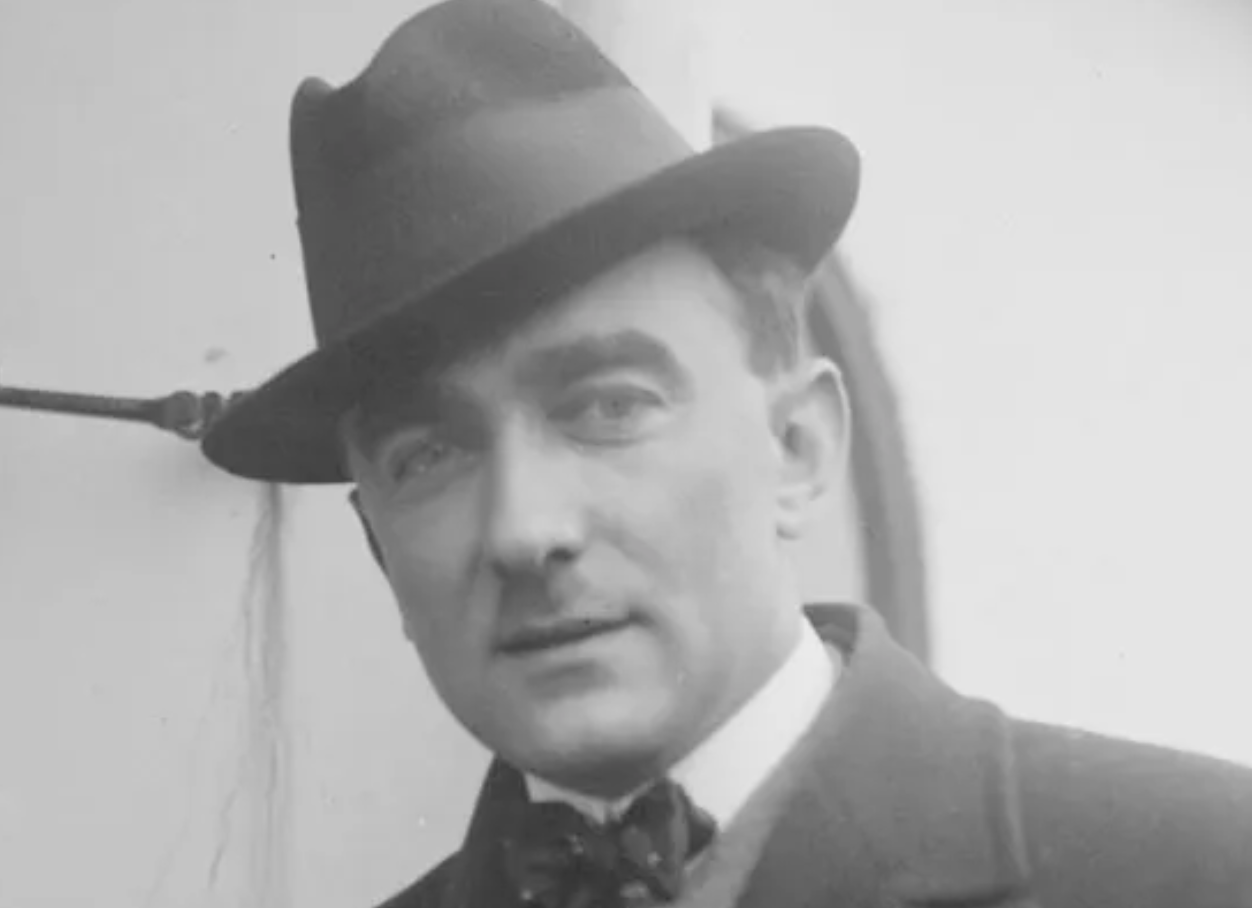
Just over 200 years ago there were no permanent London orchestras or organised series of chamber music concerts at all, so a group of thirty music professionals got together in 1813 to create the Philharmonic Society, a British music society that was formed to promote performances of instrumental music in London. The Society’s aim was “to promote the performance, in the most perfect manner possible of the best and most approved instrumental music”. One of the founders, Charles Neate, was a friend of Beethoven and through this connection the Philharmonic Society, now the RPS commissioned a new symphony from him which resulted in Beethoven’s Symphony No. 9, which was premiered in 1824 in Vienna.
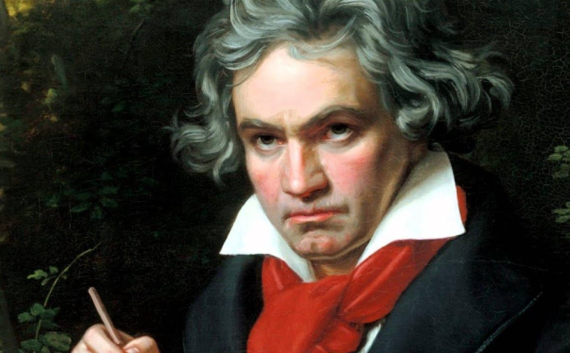
‘Beethoven 9’ as it’s often called, was the first example of a major composer scoring vocal parts in a symphony where the fourth movement introduces a choir and four soloists singing a version of Schiller’s Ode to Joy. Regarded by many critics and musicologists as a masterpiece of Western classical music and one of the supreme achievements in the history of music, Beethoven’s 9th Symphony is one of the best-known works in classical music both in the East and West and stands as one of the most frequently performed symphonies in the world.
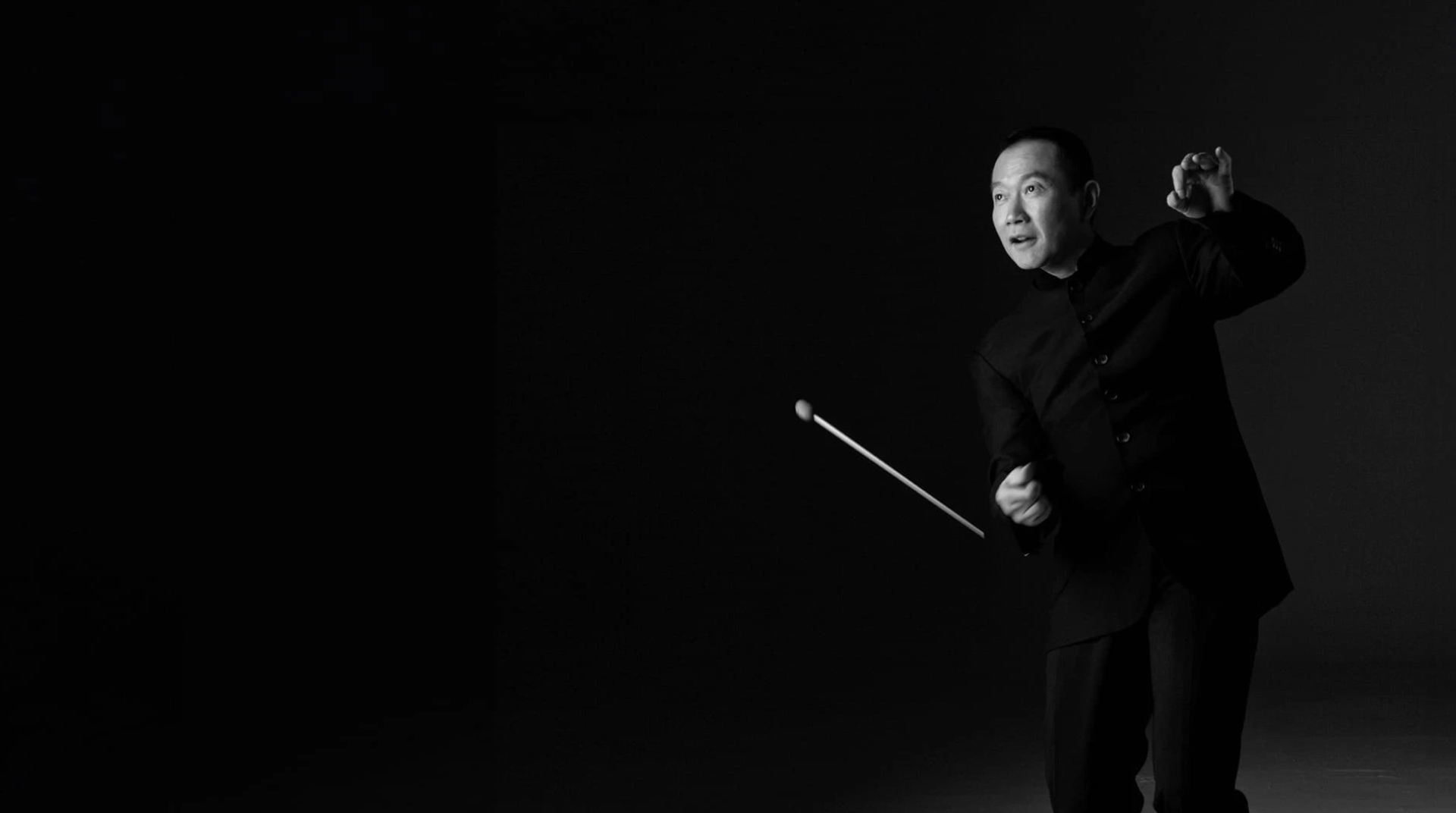
When it came to celebrating the 200th anniversary of this world renowned piece in 2024 the RPS decided to commission a new work to mark this special bicentenary and approached the great Chinese composer and conductor Tan Dun to compose a new 9th choral concerto as a partner piece.
Tan Dun, a Chinese-born American composer and conductor, is a leading figure of contemporary classical music who draws from a variety of Western and Chinese influences. He was born in Changsha in Hunan, China and, as a child, he was fascinated by the rituals and ceremonies of the village shaman, which were typically set to music made with natural objects such as rocks and water – sounds you can hear in many of his compositions today.
Due to the bans enacted during the Cultural Revolution, he was discouraged from pursuing music and was sent to work as a rice planter on the Huangjin commune. Luckily he was able to join an ensemble of other commune residents and learned to play traditional Chinese string instruments. Following an accident that resulted in the death of several members of a Peking Opera troupe, Tan Dun was called upon as a violist and arranger. This initial success earned him a seat in the orchestra, and from there he went to study at the Central Conservatory of Music in Beijing in 1977 before moving to New York City as a doctoral student at Columbia University. His musical career then took off in the States and by 2000 he’d won an Academy Award, a Grammy Award and a BAFTA for his film score for Ang Lee’s Crouching Tiger, Hidden Dragon. Since then, in the last 25 years he has achieved success after success in the music word as a composer and as a conductor and has also received the Grawemeyer Award, the Bach Prize, the Shostakovich Award and most recently Italy’s Golden Lion Award for Lifetime Achievement – as well as becoming a UNESCO Global Goodwill Ambassador.
So it’s very exciting for us to not only be performing this new commission, Tan Dun’s Choral Concerto: Nine – an Ode to Peace, in this UK premiere, but also to be working and performing with him as the conductor of it. We were lucky to catch up with this super busy Maestro in his office in Shanghai to find out more about the composition of his new piece and how he went about creating it.
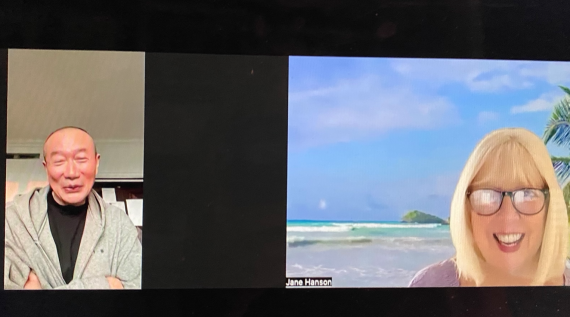
“Beethoven is my God,” he told us, “I love his work and have been passionate about it for years so to be given this commission is the most wonderful and exciting thing. I had conversations with the RPS and we talked about how we could focus and use dialogues and motifs from Beethoven’s masterpiece as part of what I was going to compose. If you ask me which melody everyone in the world can hum it has to be Ode to Joy and all those very interesting motifs of Beethoven talked to me deeply and spiritually. When I listen to the opening of his Ninth Symphony I hear nature and the metaverse, like travelling through different beautiful sounds showing a completely different earth and different people, so I decided to compose influenced by that. We also decided to keep the same instrumentation as Beethoven 9 to show the audience that the instruments are the same but that the sound is now very different, so this was my idea for the piece. The only difference in the orchestra is that we’ve also thrown in some extra Chinese percussion.
Then I thought about what it is that relates in the Schiller and the Nine of Chinese poetry, I wanted to reflect the words and inspiration of Schiller’s Ode to Joy in talking about brotherhood, friendship, joy and peace. I found a profound connection between the words in Beethoven’s Ninth Symphony and Chinese philosophy, discovering that the ancient Taoist thinkers Lao Tzu and Chuang Tzu, some 2,500 years ago, expressed ideas similar to those found at the beginning of Ode to Joy, where Friedrich Schiller’s lyrics proclaim that “all people are brothers and all creatures are together in this one world”. So I’ve arranged poems by Qu Yuan (BC. 340), Laozi (BC. 571), Li Po (AD. 701), and Friedrich Schiller (AD. 1759). They are sung in English with nine words in Mandarin and some non-word-sounds which all reflect to me the joy and message of the piece.
The digit 9 itself is very important to human beings and especially for the Chinese with its special Feng Shui energy which we use for all kinds of things such as our houses, landscaping and architecture and also for some of our life choices. The Feng Shui of the number 9 itself means forever, everlasting and travelling from the universe to the metaverse which is why Nine is the title of the first movement.
In Chinese 9 is pronounced as the word Jiǔ and this word also suggests “wine” and conveys the idea of something “everlasting” so it’s perfect to link them all and that’s why the Symphony is arranged in three movements entitled, Nine, Wine, and Time.
九 (Jiǔ) – The Number Nine
酒 (Jiǔ) – Wine
久 (Jiǔ) – Eternity
I love the beginning of Schiller’s Ode to Joy when his poetry says drink, drink with the fire of our spirits and I realised the poetry of 9 by Chi Yuan, the first poet of China was saying the same thing – drink with fire and sprit, the ritualistic burning dance. It seemed to me that Schiller and Char Yan, although 2,500 years apart, were talking the same language and also talking as if this was being written right now, so I thought nine with the drinks, with the nature and the sprit is a very interesting aspect – which is why the second movement is entitled Wine.
And the 3rd movement – this movement of course is Time – that’s how Beethoven showed us something that was forever, about the human spirt and love and sharing, and that all people are brothers and sisters which is good for all humanity for all time.
The piece is an English based concerto with only nine Mandarin sounds, but it also has more than ten kinds of percussive language for the choir including drum language, Chinese percussion sounds, a fair bit of portamento and all kinds of ring tones of the mouth such as overtones, so I’m absolutely delighted that it is the LPC (along with the London Chinese Philharmonic Choir) who will be performing this premiere in the Royal Festival Hall on the 28th March. Last time we worked together in 2023 we had a wonderful performance with the LPO and your choir who I have to say is one of the best, best, best in the world – so I can’t wait to work with you again. I think the LPC are boundary-less and very brave to work on all kinds of vocalisations from different cultures which I have included in the piece (wait until you hear us singing Elvish in our April/May performances Maestro!). You really show your bravery in the spirit of discovery and I feel very lucky as a composer to have you singing this; I feel so honoured to work with you again and this time we will really do the absolute best to honour my hero Beethoven with both pieces.”
Singing alongside us in this concert are the London Chinese Philharmonic Choir (LCPC) – a cultural community choir who are trained by our Guest Associate Chorus Director, Bo Wang.
Alto Wen Xing told us how excited she was about singing in this concert and how much hard work they’ve been putting in to be up to scratch:
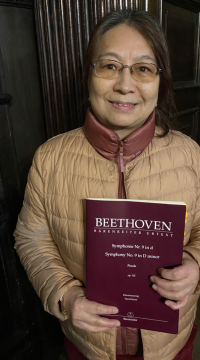 “I think the new piece is a very nice piece, especially talking about nature – all creatures and mankind being as one and united in peace. I think it’s very, very much a mirror of what Beethoven wrote for his ninth symphony and it’s very exciting and a positive energy of music. It’s not only something you can enjoy but also something very meaningful for mankind in the hope we can live peacefully together and look after nature.
Rehearsal is very hard for us, especially as quite a few of the choir can’t read European notation or speak English, but we enjoy it very much. I try to use the piano to assist me when I’m learning at home and I’m learning the European way now. We learn a lot through listening and through our teacher, Bo Wang, who has done a lot of work to translate the European notation system into our system which is a number system – we use 1,2,3,4,5,6,7- for the notes Do-Re-Mi-Fa-So-La-Ti. And of course English and German are quite a challenge for us to learn to sing and pronounce well (we feel the same about Mandarin Wen!).
Despite this I am enjoying every moment of learning and it’s a good opportunity to develop myself and to become better at something that challenges me, and it’s definitely good to sing with the LPC. You have sung this many times; for us it’s the first time and we have a lot to learn but you will help us a lot – music is a language for everyone whatever language you speak – we can all sing together and enjoy together.”
Soprano Qui Yan Liu has been in the LCPC since it began 13 years ago:
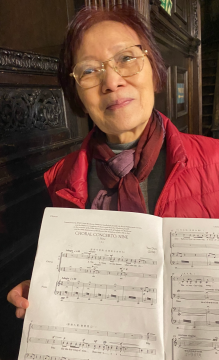 “Bo (Wang) is brilliant,” she told us, “without him we wouldn’t be here – he knows how to teach and he knows how to encourage us to sing well and he is very professional – he knows how to do things at every level and we all love and respect him.
We feel honoured to sing with the LPC and quite lucky to have the chance because your level is so high and we are not so professional, you are really brilliant so to sing with you we can learn a lot and have a chance to improve our singing techniques. It’s also good to join you to make a bridge and a link between Western and Chinese music. Normally we sing classical Chinese songs so to sing this more European music is difficult for us but an amazing privilege. We’ve been practising for a year now because it’s so hard for us but we are so happy to do this and we hope one day to try and come nearer to your level of singing. It’s a really nice collaboration – in the future hopefully we will have more chances to work together but for now I can’t wait to sing with you in this concert and with Maestro Tan Dun.”
LPC bass Nick Jackman also works for the LPO as their Campaigns and Projects Director and is particularly looking forward to this project as a collaboration project and especially because we’re working with Tan Dun again:
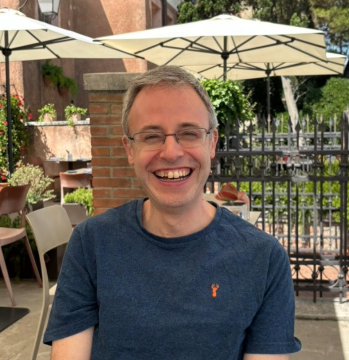 “I saw the Buddha Passion project we did together in 2023 and spent most of my time wondering why I didn’t sing in it, and then the orchestra performed Tan Dun’s Water Concerto which was such fun. Tan Dun really knows how to make interesting music so I knew I had to to sing in this new piece. It’s always great to learn a new piece and from the first rehearsal the vocal effects in it and the other sounds we were asked to produce were fun, and it’s also fascinating because there are lots of Beethoven references as well as other cultural points. It’s especially great to do a work with a conductor conducting his own music, you get so much insight which I think is quite rare, and you realise how lucky we are to be some of the only people in the world who can do this.
I love mixing work and pleasure so singing with the Choir is the perfect way for me to do that. The LPC is so friendly and welcoming, it’s truly inclusive and I really enjoy being able to turn up and sing some of the world’s greatest repertoire at such a high standard alongside happy people with whom I can also enjoy great banter – when we’re not singing! It goes without saying that as it’s a world class choir we don’t have to spend a lot of time note bashing as everyone in it is at such a great standard. That having been said there is still some work to do, especially as we are using different voice sounds as well as singing.
Also, even though Beethoven 9 is really popular, I haven’t sung it for 20 years and I’ve only sung it once before that. I say sang it twenty years ago but in fact when it came to the actual performance, a small fire had broken out in the artist’s bar and the entire concert, a BBC Prom in the Royal Albert Hall, was cancelled! Since then I’ve developed a slight love/hate relationship with it, even though it’s a great piece, because it’s so hard to sing – but I really am looking forward to doing this performance with Tan Dun, especially as we get to premiere his new piece as well.
I’m excited about it too because we are doing a second performance the following day in Birmingham Symphony Hall which is great as it’s important for us to perform around the UK and share this with other communities. We love bringing different cultures onto the stage alongside the totemic works of Western culture and working together as orchestra and choir so I’m really excited to be part of this great UK premiere in two great UK concert halls.”
Come and hear us
Saturday 28th March 2026 – 7.30pm, Royal Festival Hall
Sunday 29th March 2026 – 5pm, Birmingham Symphony Hall
Tan Dun conductor
Elizabeth Watts soprano
Hongni Wu mezzo-soprano
John Findon tenor
Dingle Yandell bass-baritone
London Philharmonic Orchestra
London Philharmonic Choir
London Chinese Philharmonic Choir
Tan Dun Choral Concerto: Nine (UK premiere)
Beethoven Symphony No. 9